Bunny Eyes and Nose Embroidery Design
A Playful, Polished Appliqué for Boutique Sweatshirts
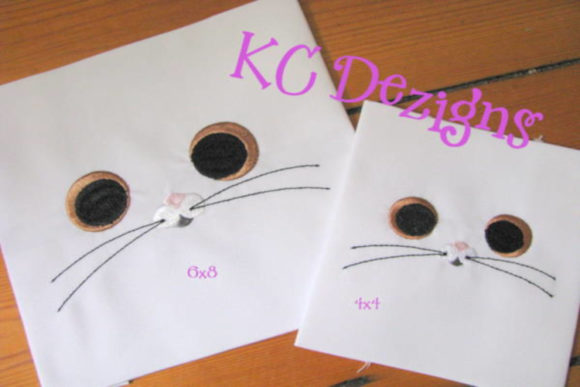
As an embroidery designer who’s developed collections for indie apparel brands and Etsy sellers for over a decade, I opened Bunny Eyes and Nose expecting charm—and found precision. This isn’t just another cartoon motif; it’s a well-balanced machine appliqué design with soft curves, intentional negative space, and subtle stitch layering that reads as both handmade and professional. The visual personality is gently whimsical—not overly cutesy or juvenile—making it ideal for unisex boutique pieces. It leans into playful and classic rather than trendy, so it won’t feel dated next season. On neutral sweatshirts or oatmeal hoodies, it adds warmth without overwhelming. On dark garments, the contrast between fabric and thread pops beautifully—especially when paired with matte cotton threads.
How Bunny Eyes and Nose Performs Across Apparel Types
Sweatshirt embroidery is where this design truly shines. Its compact proportions (available in three hoop sizes) allow clean chest placement on youth and adult small-to-medium fits—no awkward stretching or distortion. On oversized hoodies, I’d place it slightly higher on the chest to maintain visual balance, and consider using the largest hoop size for clarity at scale. For hoodie sleeve accents, the medium size works elegantly near the cuff—especially on ribbed fabric, where its smooth satin-stitched edges hold shape better than dense fill motifs.
For t-shirt embroidery, test first on lightweight jersey: the appliqué base stabilizes well, but always pair with a light tear-away + cut-away combo stabilizer to prevent puckering. On denim jackets, the design’s moderate stitch density avoids stiffness—unlike heavy fill designs that crack over time. And on tote bags or canvas, the bunny elements retain crisp definition even after repeated washing, thanks to thoughtful satin-stitch directionality and secure underlay.
In commercial embroidery workflows, Bunny Eyes and Nose integrates smoothly into seasonal collections—think Easter-themed loungewear, spring baby sets, or gender-neutral “cozy life” merch. It’s also strong in printable mockups and social media graphics: its clean silhouette scales well for Instagram carousels and Etsy listing banners, helping small shop product visuals feel cohesive and intentional.
Smart Placement & Fabric Considerations
This isn’t a one-size-fits-all motif. Use Bunny Eyes and Nose thoughtfully: avoid placing it directly over high-stretch zones like side seams or curved waistbands unless you’ve tested on identical fabric. On fleece or thick French terry, opt for the larger hoop size—the extra real estate gives stitches room to settle without compression. For ribbed fabric, align the design horizontally with the ribs, not across them, to reduce tension-related distortion.
On dark garments, choose thread colors with enough tonal contrast—cream or heather grey instead of stark white—to keep it soft and boutique-appropriate. If pairing with tiny lettering (e.g., “Hop Along” beneath), confirm spacing in your embroidery software first; the nose’s curve can influence baseline alignment. And remember: because it’s an appliqué, fabric choice matters more than with standard fill designs—pre-wash cotton blends to minimize shrinkage shifts post-embroidery.
Building Brand Trust Through Thoughtful Detail
Small shop owners know this: customers don’t just buy a sweatshirt—they buy confidence in your taste and craftsmanship. Bunny Eyes and Nose supports that trust. Its refined execution signals attention to detail, elevating a simple hoodie from generic to signature. When used consistently across a collection—say, on chest, sleeve, and back pockets—it reinforces visual consistency without feeling repetitive. That kind of cohesion builds brand identity faster than any logo alone.
For Etsy sellers, this design helps listings stand out in search results for “boys embroidery,” “machine appliqué,” or “sweatshirt design.” But more importantly, it performs well in lifestyle product photos: the soft eyes catch natural light beautifully, and the nose’s slight dimension reads clearly even in flat-lay shots. That translates directly to higher engagement and longer dwell time—key metrics for conversion.
Practical Designer Notes Before You Stitch
- Always test on scrap fabric—especially if stitching on stretchy or textured material. Run a full sequence, then wash and dry the sample to check for thread migration or edge fraying.
- Confirm your stabilizer choice: Light cut-away for knits, medium-weight tear-away for stable wovens, and fusible + tear-away for fleece or terry.
- Review thread color contrast before digitizing placement—some hues disappear on heathered or melange fabrics.
- Double-check hoop size against your garment’s target area. A mismatch leads to rehooping delays or off-center results.
- Inspect stitch density in your embroidery software—look for tight corners or overlapping satin columns that could snag on brushed fabrics.
- Test on the same fabric type you’ll use for production—even similar-looking fabrics behave differently under needle and thread.
- Compare placement options in your design layout: center chest, left chest, sleeve, or back yoke—each changes how the motif reads in motion and at scale.
- Verify Creative Fabrica product details before selling finished apparel—confirm licensing terms, especially for commercial embroidery and digital resale.
Final Thoughts for the Boutique Embroiderer
Bunny Eyes and Nose doesn’t shout—it invites. It’s the kind of Creative Fabrica embroidery file that feels curated, not crowded. For makers building a custom apparel line with quiet confidence, it delivers versatility without compromise: soft enough for newborn onesies, structured enough for adult hoodies, and distinctive enough to anchor a small shop product line. Whether you’re an Etsy seller refining your spring drop or a local embroidery shop expanding your digital embroidery file library, this is a smart, scalable addition—not just another download, but a considered design partner.